
ACMO Accounts Payable Automation
ACMO Accounts Payable Automation Overview
Features
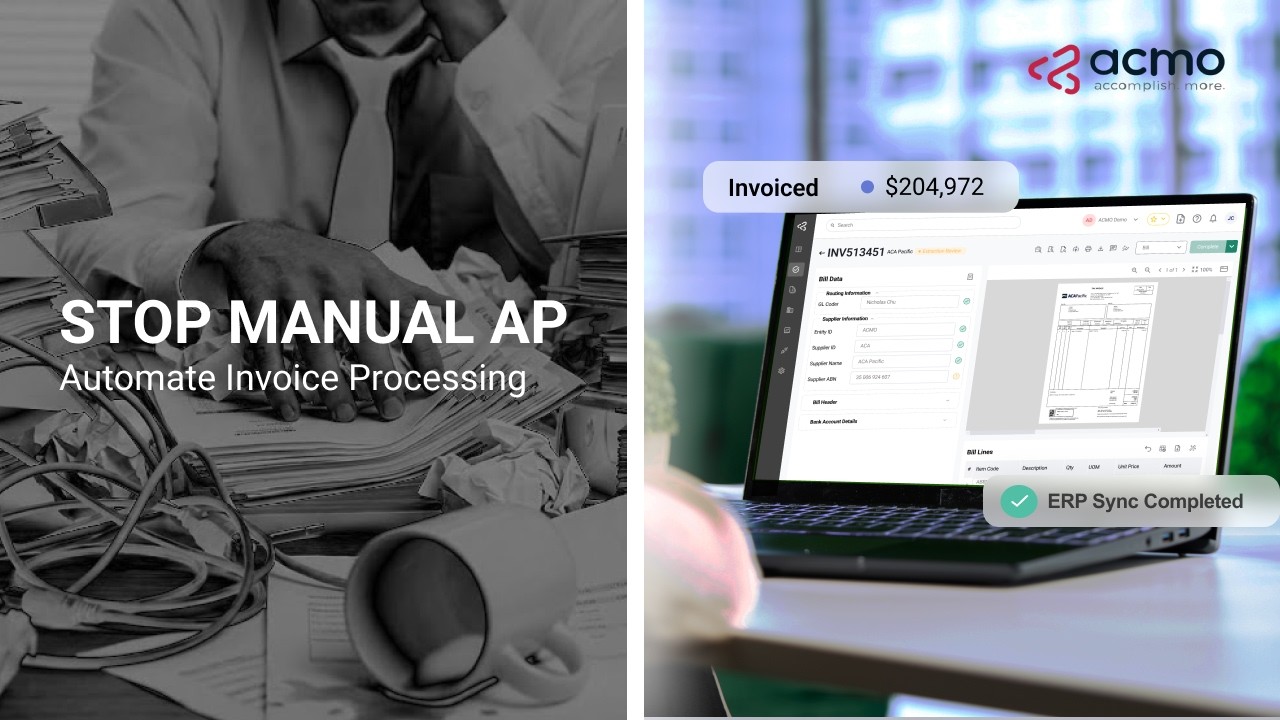
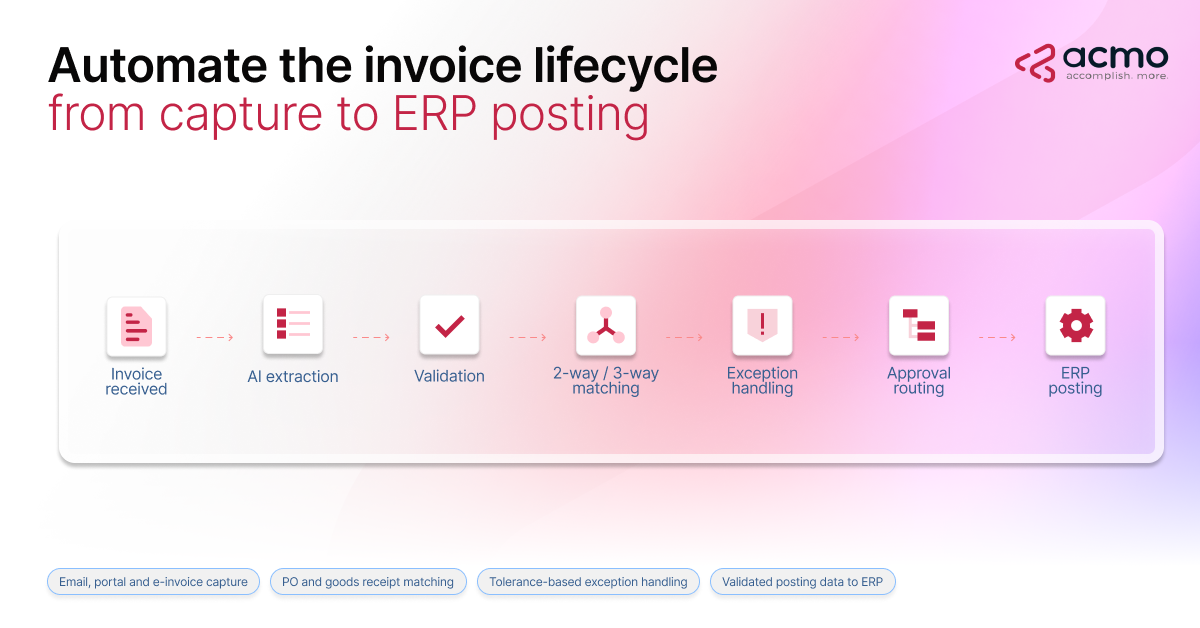
- AI-assisted invoice capture and data extraction
- Email, portal, mobile and other supported invoice ingestion channels
- PO and non-PO invoice processing
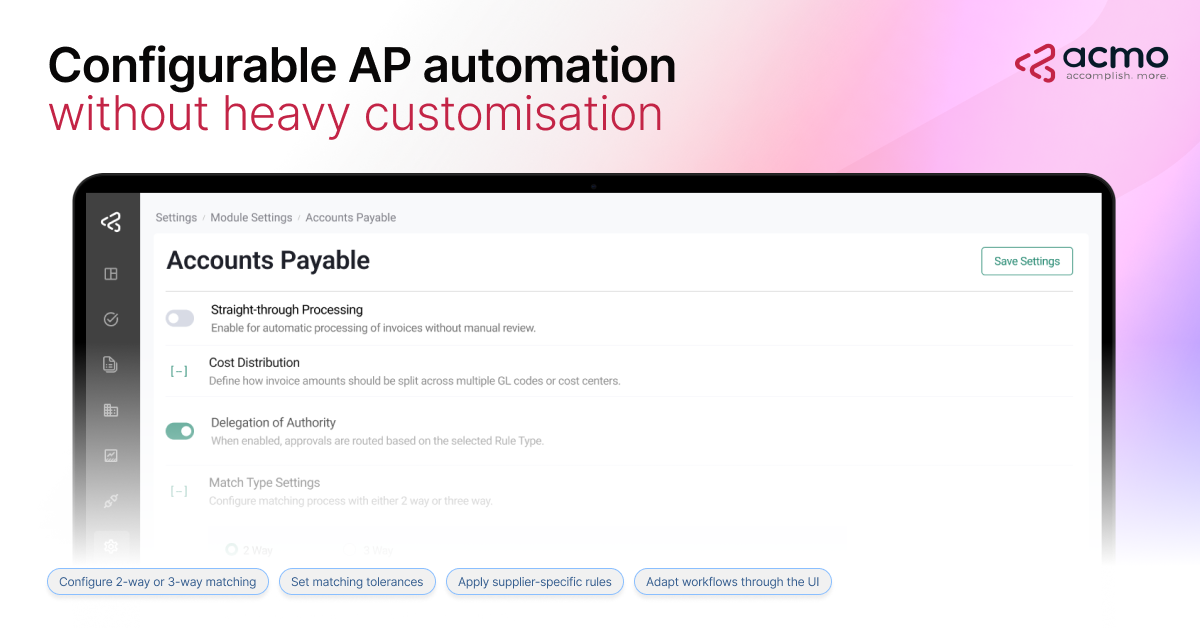
- Two-way and three-way matching support
- Configurable matching rules and tolerance handling
- Supplier-level and tenant-level processing configuration
- Exception handling for mismatches, missing data and validation issues
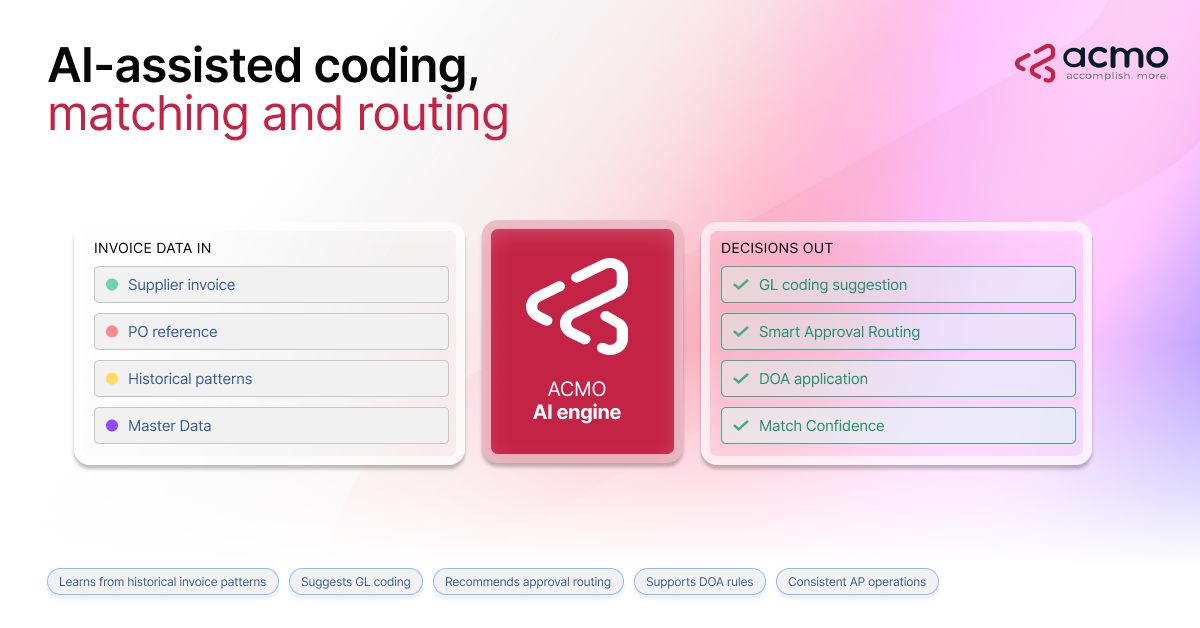
- Approval workflow routing based on business rules and delegation requirements
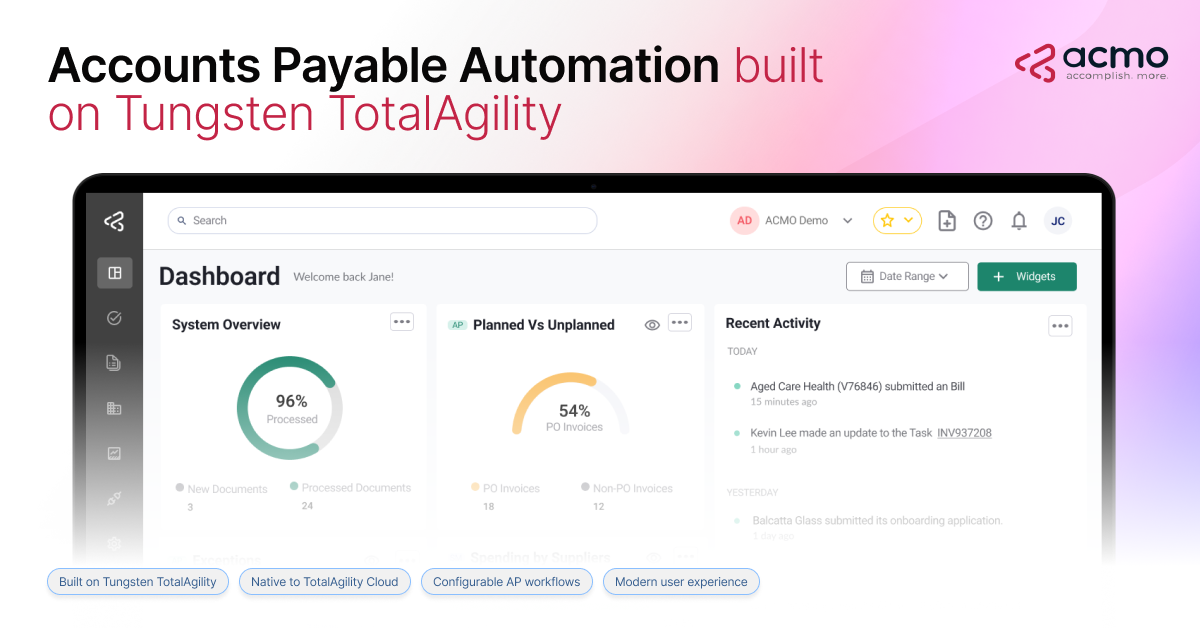
- Role-based access and task management
- Invoice coding and validation support
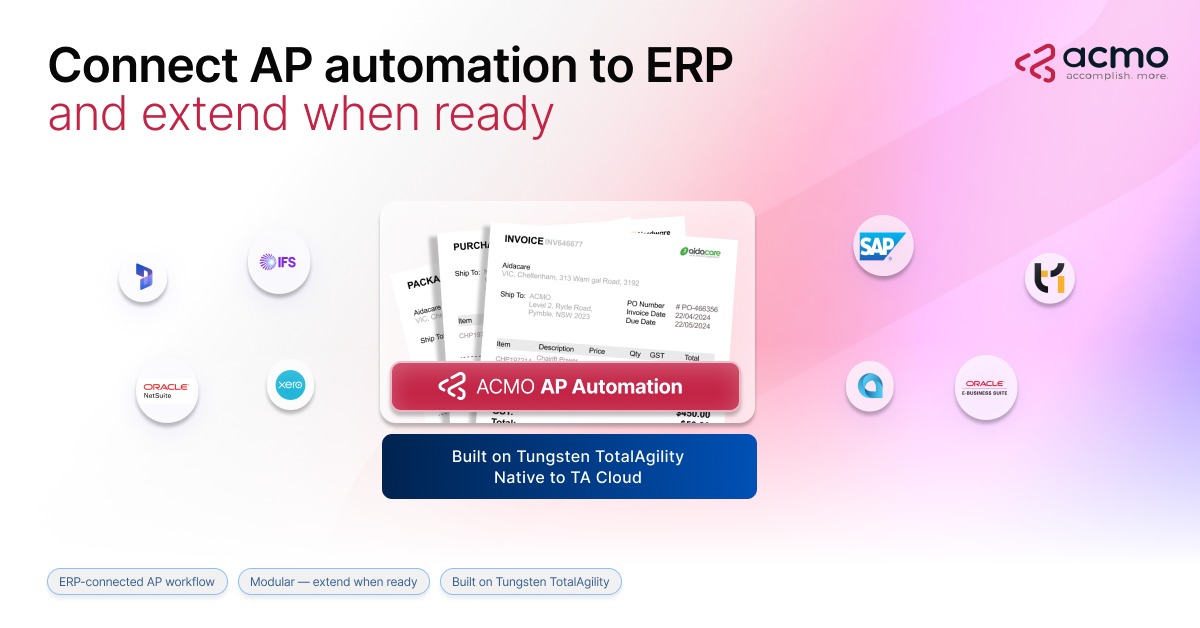
- ERP integration for supplier, PO, GRN and invoice data exchange
- Dashboards and reporting for AP visibility
- Audit trail across invoice processing, approval and exception activity
- Support for Peppol e-invoicing where enabled
- Packaged SaaS delivery model with implementation patterns designed for repeatability
Benefits
- Reduce manual invoice handling and data entry
- Improve invoice processing speed and operational consistency
- Strengthen controls across approvals, matching and exceptions
- Increase visibility over AP workload, bottlenecks and invoice status
- Support better compliance through auditability and role-based access
- Reduce dependency on email-driven and spreadsheet-based AP processes
- Improve supplier and internal stakeholder experience
- Enable finance teams to manage higher invoice volumes without scaling manual effort
- Support PO-based, non-PO and exception-heavy AP scenarios
- Help organisations modernise AP while continuing to use their existing ERP systems
- Provide a packaged product option for customers who want more than a toolkit or custom services engagement
- Create a repeatable AP automation pathway for Tungsten customers and partners
Technical Details
Inputs
ACMO Accounts Payable Automation can consume and process inputs such as:
- Supplier invoices
- Credit notes
- PO invoices
- Non-PO invoices
- Peppol e-invoices, where configured
- Invoice attachments and supporting documents
- Supplier master data
- Purchase order data
- Goods receipt or service confirmation data
- Approval hierarchy and delegation rules
- GL coding and cost allocation reference data
- Business rules, validation rules and tolerance settings
- ERP reference data required for invoice validation and posting
Outputs
The system can produce outputs such as:
- Captured and validated invoice records
- Extracted invoice header and line-level data
- Matched invoice, PO and goods receipt information
- Exception tasks for AP users or business approvers
- Approval tasks and routing outcomes
- Audit history of processing, validation and approval activity
- Invoice status updates
- ERP-ready invoice data
- Posted or export-ready invoice transactions, depending on integration scope
- Operational dashboards and AP performance visibility
- Reporting data for workload, exceptions, approvals and processing status
Geographic Availability
Additional Information
ACMO Accounts Payable Automation is delivered as a packaged SaaS module rather than a custom-built implementation project. It is designed for mid-market and enterprise organisations that want to modernise invoice processing, improve AP controls and gain better visibility across invoice operations.
The module is built with Tungsten technology at its core and packaged by ACMO as a ready-to-adopt AP automation product. It can support both PO-based and non-PO invoice workflows, with configurable approval routing, validation rules and matching logic aligned to the customer’s operating model.
ACMO currently has live customers in Australia and New Zealand and supports regional deployment, operational support and data residency considerations. While the current market focus is ANZ, the solution can be deployed in other regions subject to customer, compliance and partner requirements.
ACMO is also available on AWS Marketplace, giving customers an additional procurement pathway and enabling eligible organisations to transact through their existing AWS commercial arrangements.
Implementation scope typically depends on invoice volumes, ERP integration requirements, approval complexity, master data readiness and the level of AP process change required.


